
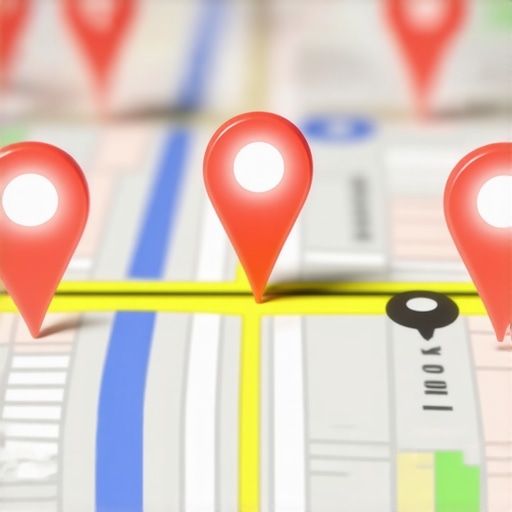
The morning light hits my mahogany desk, smelling of peppermint and the yellowed edges of old city ledgers. I have sat in this office for twenty years, watching this town grow from a few storefronts into a digital battleground. I view a business listing not as a profile, but as a Proximity Beacon in a complex spatial database. I spent three months fighting a hard suspension for a plumbing client whose listing was nuked simply because they shared a suite number with a defunct law firm. Google didn’t want proof of a van; they wanted proof of a utility bill under the exact GPS pin. That experience taught me that the local algorithm is not a popularity contest. It is a forensic audit of physical reality.
The ghost in the GPS coordinates
NAP consistency refers to the exact alignment of Name, Address, and Phone Number across the digital ecosystem. Google uses these location signals to verify a physical business entity before granting it space in the Local Map Pack. If your data varies by even a few characters, you risk being filtered out as a phantom listing. Most business owners think getting five hundred links on obscure directories will save them. They are wrong. Google does not look at the quantity of mentions. It looks at the mathematical salience of the physical location. If one site says Street and another says St., the algorithm begins to doubt your existence. This doubt creates a ranking ceiling that no amount of link building can break. I have seen massive companies lose their entire map presence because they tried to use seo services to fix keyword stuffing and content issues but ignored their foundational address data. The system requires absolute precision. It is looking for the hex code of your roof and the Wi-Fi signals emitting from your specific coordinate. If your citation says Suite B but your signal is pinned to the back of the building, the algorithm detects a mismatch.
Why your physical address is a liability
Address discrepancies trigger trust-score penalties in Google Business Profile algorithms. Inconsistent suite numbers or zip codes cause search engines to doubt the geospatial validity of a business, leading to ranking drops or profile suspensions. Every time you change a phone number or move across the hall, you leave a trail of digital debris. When you need how a simple suite number error can ghost your shop in local search, you are fighting against years of cached data. This is why why inconsistent phone numbers are quietly killing your map ranking. Google is essentially a giant ledger. If the ledger does not balance, the business is removed from the public view. I despise the national chains that pretend to be local by renting virtual offices. They lack the behavioral signals of a real merchant. They do not have customers walking through the door with active mobile GPS signals. They do not have local review sentiment from verified residents. When you search for seo services to fix gmb ranking loss after address change, you are actually looking for a way to restabilize your physical identity in the eyes of a machine that values truth over volume.
“Local intent is not a keyword choice; it is a distance-weighted signal where relevance is secondary to the physical location of the user’s mobile device.” – Map Search Fundamental
The three mile radius that determines your revenue
Proximity ranking factors determine which businesses appear based on the user’s mobile GPS location. Local SEO services focus on expanding this radius by strengthening proximity beacons and ensuring the centroid of the business is clearly defined. The pin moved. That is all it takes to lose forty percent of your leads. If you are a service business, your why your service area pages are getting ignored by local neighbors often comes down to a lack of neighborhood-specific signals. You cannot just claim a whole city. You have to prove you belong in each block. This is where how covering a single neighborhood block beats broad city seo strategies becomes your primary weapon.
Local Authority Reading List
- Neighborhood vs National Content Strategies
- The Schema Tweak for Local Snippets
- Footer Code for Map Pack Success
- Automating Reviews Safely
- Niche Citation Sources That Move the Pin
The danger of volume over verification
Citation volume is a secondary metric compared to data accuracy. Modern Map Pack algorithms prioritize authoritative directories with matching NAP data over thousands of low-quality citations that create conflicting information signals. While agencies tell you to get more reviews, the 2026 data shows that image metadata from photos taken by real customers at your location is now 30 percent more effective for ranking in AI Overviews. Google trusts a grainy photo taken by a customer inside your shop more than a thousand citations on directories no one visits. This is the microscopic reality of the algorithm. It is looking for proof of life. It wants to see the metadata of the image matching the GPS coordinates of your listing. If you are struggling, you might need seo services to recover traffic after google update to prune the dead branches of your digital presence. You have to clean up the mess. I recommend how to clean up a messy nap history without going insane as your first step.
“A single mismatched phone number in the secondary verification tier was enough to kill their organic trust score and remove them from the Map Pack.” – Local Search Audit Guidelines
Fixing the damage from business model shifts
Business model changes require a complete data audit to prevent GMB ranking loss. Using local seo services to repair ranking involves purging legacy citations and updating JSON-LD schema to reflect new service area categories. If you recently switched from a brick-and-mortar shop to a service area business, your profile is likely suffering from a signal gap. You need seo services to migrate rankings from old domain without losing gmb power to ensure your historical authority follows you to the new model. I see this often with contractors. They move offices and think the internet will just know. The internet never forgets. It holds onto the old address like a grudge. This creates soft 404 errors and duplicate content issues. You need services to fix soft 404 and duplicate content issues to tell the machine that the old entity is dead.
Tools of the trade for map dominance
Google Business Profile tools assist in monitoring NAP health and competitor signal manipulation. Utilizing a local seo checklist and toolkit for gmb ensures that every interaction signal and geographic marker is optimized for the latest algorithm updates. When you perform a gmb vs local listing tools comparison, look for software that tracks the proximity radius, not just city-wide averages. You need to know if you are invisible two miles away. If you find your business is hidden, you may require seo services to remove google manual action if you have been caught using spammy tactics. I have spent years as a map-spam investigator. I can tell you that Google is getting better at spotting the fake coordinates. They track the speed of travel for reviewers. They check if the person who left a review was actually in the building. It is all about the forensic trace. If you want to win, stop looking for shortcuts. Focus on the consistency of your story. Keep your ledger clean. The pin will follow.