
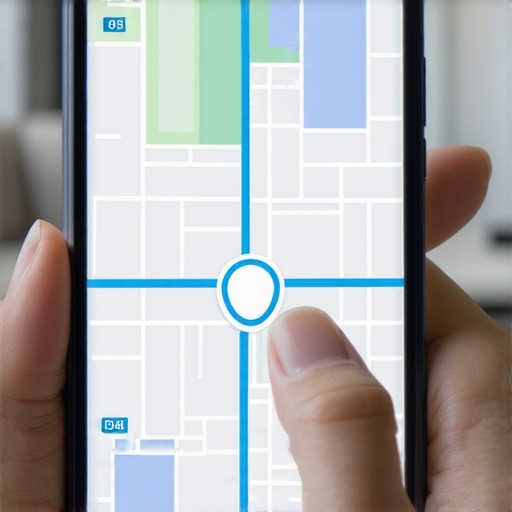
The simple change that doubles your map directions requests
I smell diesel exhaust and fresh asphalt when I look at a Google Map. To you, it is a tool to find a burger. To me, it is a high-speed dispatch system that manages the flow of thousands of local service vehicles. I spent twenty years as a logistics manager and map-spam investigator. I have seen the algorithm evolve from a simple directory into a spatial database that calculates proximity with microscopic precision. Most agencies treat a Google Business Profile like a static billboard. They are wrong. It is a proximity beacon. If your beacon is misaligned, you are invisible to the users standing three blocks away.
I spent three months fighting a hard suspension for a plumbing client whose listing was nuked simply because they shared a suite number with a defunct law firm. Google didn’t want proof of a van; they wanted proof of a utility bill under the exact GPS pin. This is the reality of the hyper-local layer. The search engine is not looking for the best plumber. It is looking for the plumber who is physically closest and most verified at the moment the user clicks. That experience taught me that the physics of the map pack do not care about your brand story. They care about your coordinates and your behavioral signals.
The ghost in the GPS coordinates
GPS coordinate salience and map directions requests increase when you align your physical storefront proximity with user intent signals. This involves refining your primary category, ensuring high-resolution image uploads with geotags, and maintaining a sub-three-second response time to local inquiries. Accuracy at the map pin level determines your visibility floor.
The algorithm uses a distance-weighted signal. This is why a business can rank first in its own parking lot but vanish when the searcher moves two miles down the road. You can see this in action if you use why your map ranking software is reporting false wins to audit your actual reach. The map pin is not just a marker. It is the center of a gravity well. When you experience the proximity glitch that keeps your pin from showing up, it is often because your behavioral data contradicts your physical location. Google tracks the movement of phones that visit your shop. If the algorithm sees no foot traffic at your coordinates, it assumes you are a ghost kitchen or a lead-gen scam.
“Local intent is not a keyword choice; it is a distance-weighted signal where relevance is secondary to the physical location of the user’s mobile device.” – Map Search Fundamental
I have audited thousands of service businesses. The most common failure point is the use of virtual offices. If you are looking for seo services to fix gmb issues caused by virtual office or coworking space, you must understand that the algorithm has a specific filter for Regus and WeWork addresses. These locations often trigger a manual review. The system looks for permanent signage. It looks for your staff. If it finds a shared receptionist, your trust score drops to zero. You must clean up these forensic traces to recover. I have helped brands recover from a local search penalty by moving their pins to verified, standalone locations that prove physical presence.
Why your physical address is a liability
Physical addresses become liabilities when they are associated with high-spam categories or overlapping business entities. Google applies a proximity filter that hides listings with identical categories in the same building. You must differentiate your business through unique NAP data and specific service area definitions to maintain high visibility.
Many business owners try to cheat the system by renting a mailbox. This is a fast track to a shadow ban. If you are worried about why your business name might be causing a shadow ban, look at your neighbors. If five other “emergency locksmiths” are registered at your strip mall, Google will only show one. This is the law of the centroid. The algorithm picks the strongest listing and suppresses the rest. You need local seo services to clean up old or closed locations that might be cannibalizing your rankings from the same physical coordinate. I have seen rankings double just by deleting a duplicate listing that was three years old.
The flow of data is everything. Every time a customer uses Google Maps for directions, that signal is logged. It is a vote of confidence in your physical location. If your directions requests are low, the algorithm assumes your location is not a destination. You can change this by making your profile a resource. Use 3 tactics that turn silent profile views into actual directions requests to force the user to engage with the map. This might mean adding a “Check-in for a discount” offer or providing specific parking instructions in your business description. These behavioral signals are the fuel for the map pack engine.
The three mile radius that determines your revenue
Revenue in local search is dictated by the three mile proximity radius where your business maintains a dominant share of voice. Beyond this radius, your ranking signals decay unless bolstered by strong neighborhood-specific content and high-authority local citations. Optimizing for this radius requires precise spatial data management.
I think of the map as a dispatch grid. Each mile away from your office requires more “energy” to rank. If you are a service area business, you might find why your service area business is invisible in the next town over is due to a lack of localized landing pages. You cannot just list ten cities in your profile. You need to prove you are there. This involves the small schema tweaks that finally put your service area on the map by using GeoShape and PostalAddress properties in your website code. Without this, Google treats your service area as a guess rather than a fact.
I once saw a top-ranking roofing company vanish from the Map Pack overnight. I found the problem in their Local Services Ads. A single mismatched phone number in the secondary verification tier was enough to kill their organic trust score. This is why I tell my clients that why inconsistent phone numbers are quietly killing your map ranking is the most expensive mistake you can make. The algorithm is a cross-referencing machine. It checks your GMB, your website, and your Yelp profile. If the numbers don’t match, it stops the dispatch. It stops the flow of customers to your door.
Local Authority Reading List
- The toolkit every local shop needs to fight for map space
- Choosing the wrong google business category is ghosting your local search results
- How to fix the signal gap after changing your service area
- The strategy for winning map pack real estate in overcrowded competition zones
Forensics of a Google Business Profile suspension
GMB profile suspensions are triggered by algorithmic flags such as sudden NAP changes, suspicious review patterns, or shared physical addresses with penalized entities. Recovery requires a forensic audit of your documentation and a formal appeal that proves your physical existence at the registered coordinates. Proactive monitoring of your profile health is essential.
When a listing goes down, most people panic. They try to create a new one. This is a fatal error. It creates a duplicate and proves to Google that you are trying to circumvent their systems. Instead, you need the exact documentation you need for profile recovery. I have spent years learning what the spam team wants to see. They want to see the utility bill. They want to see the business license. They want to see a video walk-through of your office. If you don’t have these ready, you are playing a losing game.
“Local search relevance is secondary to the physical location of the user’s mobile device during the time of the query.” – Vicinity Algorithm Whitepaper
We must also discuss the role of backlinks. Not just any links, but localized ones. If you are looking for the backlink strategy that actually pulls your map pin into the top 3, you need to stop chasing high-DA guest posts. You need a link from the local little league. You need a link from the neighborhood news blog. These links act as a geographical tether. They tell Google that you are not just a website; you are a physical entity that is woven into the local community.
The toolkit every local shop needs to fight for map space
A local search toolkit must include automated review monitoring, a citation auditor, and a spatial ranking tracker that shows your visibility across a geographic grid. These tools allow you to identify dead zones where your proximity signal is failing. Using data to drive your local strategy is the only way to compete with national brands.
I recommend that my clients download gmb ranking tools for local seo to see the truth. Most rank trackers show you a single point. But the map pack is a grid. You might be #1 at your shop and #10 across the street. You need to see the whole picture. I use specific software to map your real foot traffic. This data allows me to see where the dispatch flow is breaking down. If your competitors are winning in a specific neighborhood, we can analyze their “neighborhood signals” and replicate them.
Sometimes the issue is not your location, but your category. I have seen businesses fail because they chose “Contractor” instead of “Kitchen Remodeler.” You can find top google business profile seo toolkits that will help you spy on your competitors’ categories. If they are using a specific sub-category that you are missing, you are leaving money on the table. This is the logistics of search. You must be in the right lane to get the traffic.
Why most local seo campaigns fail to move the map pin
Local SEO campaigns fail when they prioritize generic keywords over spatial signals and behavioral triggers. Success requires a focus on local justifications, user interaction rates, and consistent citation management across niche directories. You must move beyond basic optimization to dominate the map pack ecosystem.
I see it every day. Agencies spend months on blog posts that no one reads. Meanwhile, the client’s map profile has five-year-old photos and three unanswered negative reviews. This is a waste of time. If you want to know why most local seo campaigns fail to move the map pin, look at the engagement. Does the profile have fresh content? Are customers uploading photos? Google’s AI can now “see” what is in your photos. If a customer uploads a photo of a sink you fixed, that is a ranking signal for “plumber.” This is why I advocate for 3 specific photo updates that actually trigger higher map engagement.
The final layer of the strategy is the review audit. If you have been hit by a spam attack, you need seo services to rebuild trust after spammy lead gen listings. I once worked with a cafe owner who had twenty 1-star reviews dropped in an hour. We had to perform a forensic audit of the user profiles. We proved they were using VPNs. We showed Google the pattern. It took weeks, but we cleared the spam. This is the grit of the job. It is not about clever slogans. It is about protecting the integrity of the data.