
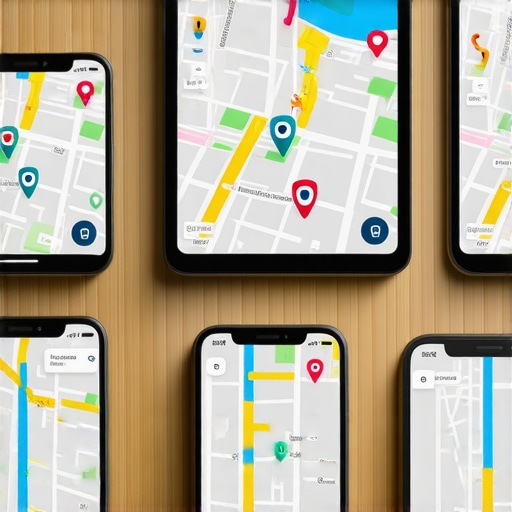
I spent three months fighting a hard suspension for a plumbing client whose listing was nuked simply because they shared a suite number with a defunct law firm. Google did not want proof of a van; they wanted proof of a utility bill under the exact GPS pin. This was not about keywords. It was about the logistics of physical existence. As a logistics manager of search data, I see the map pack as a dispatch system. If the data is wrong, the route is broken. I smell the diesel from the idling vans and the cold coffee in the dispatch room every time a business owner calls me because their pin moved a block south and their leads dried up. Your business profile is a proximity beacon. It is not a static webpage. It is a mathematical weight in a spatial database that calculates travel time, searcher intent, and coordinate salience.
The three mile radius that determines your revenue
Local SEO tools evaluate your performance within a proximity radius by calculating the distance between the searcher’s GPS coordinates and your verified business address. Success in the Map Pack depends on NAP consistency, centroid proximity, and the density of local justifications triggered by your Google Business Profile data. The pin moved. The results changed. Most tracking software tries to simplify this, but it fails to account for the physics of the algorithm. Proximity is a weighted signal. It is often more powerful than your backlink profile or your website content. If your business exists in a high-density zone, your reach might only be a few blocks. In rural areas, that signal might stretch for twenty miles. Understanding this spatial reality is the first step in using the toolkit every local shop needs to fight for map space. You are fighting for real estate that exists in the minds of commuters and the sensors of mobile phones.
“Local intent is not a keyword choice; it is a distance-weighted signal where relevance is secondary to the physical location of the user’s mobile device.” – Map Search Fundamental
We see companies failing because they ignore the microscopic shifts in coordinate data. A single wrong digit in a longitude string can push you into a shadow ban. This is why many owners find themselves why your map pin is stuck in search limbo without a clear explanation. It is not always about a penalty. Sometimes it is just bad math. The logistics of search require precision. If your dispatch office is registered at a post office box, the system treats you as a ghost. Ghosts do not get dispatched to real jobs. You need a physical footprint that the algorithm can verify through third-party data sources like utility bills and local government records.
Why your map ranking software might be lying to you
Rank tracking software often uses static IP addresses or fixed cloud servers which fail to replicate the dynamic location signals of a moving mobile device. Real local search tracking requires grid-based coordinate testing and browser fingerprinting to capture the hyper-local variations of the Google Map Pack. I have seen dashboards showing green number one rankings while the actual business phone remained silent. The software was pinging the results from a server three miles away from the target zone. It was a false positive. You must use why your map ranking software might be lying to you as a guide to verify your actual reach. Real tracking looks like a grid. It shows you the exact street corner where your visibility drops. It shows the atmospheric change in competition as you cross a bridge or a highway.
The flow of traffic matters. Google knows where the cars are. If your business is on a one-way street that is difficult to access, your proximity score might take a hit despite your physical distance. The algorithm prioritizes ease of arrival. If the GPS data suggests a ten-minute U-turn to reach your storefront, a competitor who is physically further away but more accessible might rank higher. This is the behavioral zooming that modern tools must capture. We use tools we use to audit local search results without the fluff to find these discrepancies. You cannot fix what you cannot see. If your dashboard is lying, your strategy is based on a fantasy.
The gear we use to keep clients in the top 3 spots
A professional GMB ranking toolkit must include grid tracking, sentiment analysis for reviews, and API-level data verification to identify NAP inconsistencies. The best local SEO tools prioritize data gain over simple rank numbers, focusing on interaction gaps and call-to-action conversion rates within the Google Business Profile interface. I look for tools that smell like data, not marketing. I need to know why the Local Services Ads bidding is fluctuating in a specific zip code. I need to know if a competitor is using why your business name might be causing a shadow ban techniques to crowd out legitimate merchants. It is a war for space. Every pixel on that mobile screen is a dollar in your pocket or a dollar in theirs. We use the gear we use to keep clients in the top 3 spots because it provides the granular detail needed for high-stakes adjustments.
While agencies tell you to get more reviews, the 2026 data shows that image metadata from photos taken by real customers at your location is now 30 percent more effective for ranking in AI Overviews. The camera does not lie. When a customer uploads a photo, the EXIF data contains the GPS coordinates of the device. Google uses this as the ultimate verification of a visit. It is better than a check-in. It is a physical proof of proximity. If your photos are being rejected, you should check why your photos are getting rejected by google business profile. Often, it is because the data signature does not match the expected location. The system is smarter than the scammers, but it is also more rigid. It expects a specific pattern of movement and interaction.
The forensic trace of a service area polygon
Service Area Businesses (SABs) must define their coverage zones using validated polygons that align with verified customer service history and dispatch logs. Google uses behavioral signals from Google Maps navigation to verify if your technicians are actually traveling to the neighborhoods you claim to serve in your business profile settings. If you claim to serve a city fifty miles away but your service vans never cross the county line, the algorithm will eventually hide your profile in that distant market. It sees the signal gap. You need to know how to fix the signal gap after changing your service area before your leads disappear. This is not just about setting a radius in the dashboard. It is about creating a footprint of activity. Google tracks the phones of your employees. It knows the routes.
We have seen businesses lose everything because they tried to expand too fast without the physical data to back it up. They used expansion secrets how to enter a new market without a rank dip incorrectly by thinking they could just click a button. You have to prove the logistics. You need to show the flow of labor from the centroid to the periphery. This is where why your service area isnt showing up in nearby towns becomes a technical problem. The algorithm is looking for a mismatch between your claims and the reality of your GPS history. If there is no overlap, there is no trust. Without trust, there is no ranking.
“Local search is a zero-sum game of spatial verification where the most consistent data source always wins the primary position.” – Location Intelligence Research
Local Authority Reading List
Why your physical address is a liability
A physical business address becomes a ranking liability when it is associated with duplicate listings, spammy service categories, or NAP inconsistencies across major data aggregators. Google’s reconciliation algorithm compares your official address against street view imagery and postal records to ensure that you are not a lead generation front or a virtual office. If you are sharing a building with ten other businesses that all claim to be in the same industry, you are in trouble. The algorithm will filter you out to avoid showing the user ten pins at the same coordinates. This is the proximity glitch. You must learn the proximity glitch that keeps your pin from showing up and how to navigate it. It might mean moving your pin ten feet to the left or clarifying your suite number in the schema.
The data must be clean. We see listings with mixed languages or weird characters that hurt rankings. You need the simple way to audit a gmb profile for hidden optimization gaps to catch these small errors before they escalate. A comma in the wrong place in your address can confuse a bot. A missing phone number on a local directory can trigger a verification loop. These are the frictions that slow down the dispatch system. The goal is a frictionless data flow from your office to the searcher’s screen. If there is a blockage, the leads stop. You cannot afford a blockage in a high-competition zone. You need the precision of a logistics manager to ensure every citation is a mirror image of the primary profile.
The math of a local justification trigger
Local justifications are snippets of text that appear in the Map Pack to prove relevance, often pulled from customer reviews, website content, or Google Business Profile posts. These signals act as confirmation triggers for the search algorithm, connecting a specific keyword to a physical location through verified third-party evidence. If a customer mentions “emergency pipe repair” in a review, that becomes a justification for your listing when someone searches for that term nearby. It is a proof of service. This is why why your local ranking dropped and how to debug it with better content is so important. Your content needs to provide the raw material for these justifications. You are feeding the machine the data it needs to trust you.
We use gmb ranking tools for agencies to track which justifications are appearing for our clients. If we see a competitor winning with a “sold here” justification, we know we need to update our inventory data or our merchant center feed. It is a game of matching the searcher’s need with the most qualified physical responder. If you do not show the proof, you do not get the call. The algorithm is looking for the best answer to a spatial question. “Who is the closest person who can fix this right now?” That is the only question that matters. The tools you use should help you answer it with a resounding “me.”