
Why your local SEO tools are giving you the wrong data
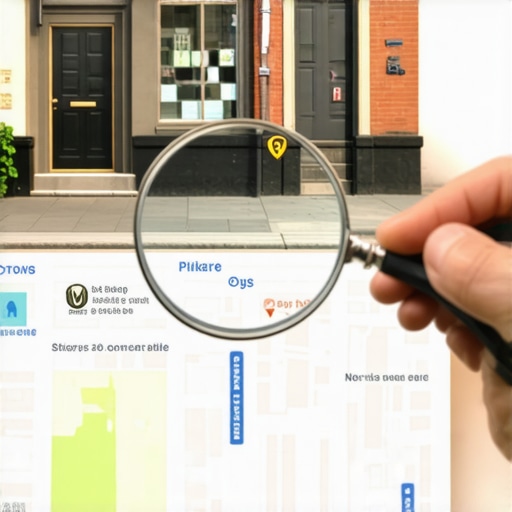
I notice the glitches first. It is the way a storefront looks in the rain, where the reflection of the neon sign does not quite match the digital pin on my screen. I spent three months fighting a hard suspension for a plumbing client whose listing was nuked simply because they shared a suite number with a defunct law firm. Google did not want proof of a van; they wanted proof of a utility bill under the exact GPS pin, showing the microscopic alignment of their physical existence with the spatial database. The air smelled like wet concrete and frustration during those late-night audit sessions. Most local SEO tools failed that plumber because they could not see the ghost in the machine. They provided clean charts while the business was dying in a data loop. If you are struggling, you might need expert map ranking help for dominating local searches to fix these invisible errors.
The ghost in the GPS coordinates
Local SEO tools often fail because they rely on fixed-point simulations rather than dynamic user signals. Google Maps utilizes Wi-Fi triangulation, Bluetooth beacons, and real-time velocity data to determine a user’s precise location. Most ranking software cannot replicate the physical movement that triggers local search results in the Map Pack. When you check your rank from a dashboard, you are seeing a sanitized version of reality. The software pings a specific coordinate and asks Google what the result is for that static point. However, the algorithm is far more fluid than that. It accounts for the historical movement of devices within a three mile radius. If your tool does not account for the way a user moves through a neighborhood, it is giving you a false positive. This is often why why your map ranking software might be lying to you about your actual visibility. You might see a green bubble on your report while a customer standing fifty feet away sees a competitor.
Why your physical address is a liability
Business locations that exist in high-density zones or shared office spaces often face proximity filters that standard SEO audits miss. Google Business Profile uses a centroid-based logic where relevance is frequently sacrificed for spatial convenience. If your NAP data matches a suspended entity, your local ranking will collapse regardless of your backlink profile. The reality is that your address is more than just a place to receive mail; it is a coordinate that Google uses to calculate trust. If you are in a building with ten other businesses in the same category, you are all fighting for the same spatial real estate. This often leads to a situation where why your business name might be causing a shadow ban because of proximity to a spammer. You need to understand the math of the centroid. If your competitor is closer to the mathematical center of the city, they will likely outrank you even with worse reviews. It is a physics problem, not a content problem.
“Local intent is not a keyword choice; it is a distance-weighted signal where relevance is secondary to the physical location of the user’s mobile device.” – Map Search Fundamental
The three mile radius that determines your revenue
Search visibility in local markets is governed by a vicinity filter that shifts based on competitor density and searcher intent. Google’s algorithm calculates a service area polygon that shrinks or expands depending on device signal strength and local justification triggers. If your GMB profile is not optimized for these spatial shifts, you will remain invisible in neighboring towns. I have seen businesses lose 80 percent of their traffic because a new competitor opened a half-mile closer to the town square. Your tools will tell you that your keywords are fine, but they won’t tell you that your geographic reach has been severed. You should consider why your service area business is invisible in the next town over before you spend more money on generic ads. The algorithm is looking for local authority, which is a combination of proximity and behavioral signals. If no one is clicking ‘Directions’ to your business from that specific zip code, Google assumes you are irrelevant there. It is a self-fulfilling prophecy that requires a spatial strategy to break.
Local Authority Reading List
- The toolkit we use to diagnose map ranking drops
- How structured data helps the map pack find your service area
- Choosing a local seo kit that doesnt waste your time
- The checklist for recovering from a local search penalty
- Why your map pin is stuck in search limbo
Forensic traces of a service area polygon
Service Area Businesses (SABs) are judged by the consistency of their GPS signals and the location data attached to their customer reviews. Google analyzes the metadata of user-uploaded photos to verify that a business actually operates within its claimed service area. If your SEO software does not track image EXIF data, it is ignoring a ranking factor that now accounts for significant AI Overview placement. Many owners struggle with how to map out your service area for better visibility because they think a simple list of zip codes is enough. It is not. Google is looking for proof of life within those borders. They want to see that your vans are actually there. They look at the location history of the devices that leave you reviews. If every review you get comes from a device that has never physically been to your service area, you will be flagged for review spam. This is why the truth about automated citations and why they often fail is so vital to understand. Automation cannot fake the physical presence that the algorithm now demands.
The mathematical weight of local review sentiment
Natural Language Processing (NLP) allows Google to extract entities and local justifications from customer reviews, turning unstructured text into ranking signals. Review sentiment is no longer just about a star rating; it is about the proximity of keywords to geographic markers within the customer’s testimony. A tool that only counts reviews is useless. You need to know what those reviews are saying about your specific location. If people mention the name of the street or a nearby landmark, that review carries ten times the weight for local rankings. This is part of the the hidden checklist for dominating local search results that the top 1 percent of agencies use. When a customer writes that you are the best plumber in the West End, Google’s knowledge graph links your business entity to that specific neighborhood. This creates a stronger proximity beacon than any keyword-stuffed description could ever manage. Conversely, a wave of generic reviews can actually trigger a spam filter. You must know how to spot fake competitor reviews before they damage your rank because the algorithm is increasingly sensitive to patterns that look unnatural.
“Local intent is a distance-weighted signal where relevance is secondary to the physical location of the user’s mobile device.” – Map Search Fundamental
Why buying the wrong local SEO tools leads to failure
Cheap local SEO tools often rely on scraped data that is outdated or cached, leading to optimization decisions based on incorrect ranking positions. Professional map ranking toolkits must offer hyper-local tracking at the zip code level to provide actionable insights for multi-location brands. If you are using a tool that only checks from the center of the city, you are missing the battle happening on the edges. I have seen clients who were why buying the wrong local seo tools often leads to suspensions because they used automated software that tripped Google’s security protocols. The algorithm is looking for human interaction. It wants to see that your profile is being managed by a person, not a script. If your tool is making bulk changes to your store hours or business description every week, you are painting a target on your back. It is better to use a simple toolkit to audit your gmb profile for better rankings that focuses on accuracy rather than volume. Precision is the only thing that wins in the Map Pack.
Recovering from the map pack visibility drop
Ranking drops in Google Maps are frequently caused by algorithm volatility, NAP inconsistency, or negative SEO attacks from competitors. Restoring search reach requires a manual audit of backlink patterns and a cleanup of duplicate listings that may be cannibalizing your traffic. When your pin disappears, the first step is to check for a shadow ban. Did your phone number change? Did you move suites? Even a minor change can break the trust loop. You might need surviving a sudden drop in your google maps placement strategies to get back into the top three. Often, the issue is not your profile, but a change in how Google views the local area. They might have expanded the proximity filter, meaning you are now competing with businesses further away. You need to verify your data across all tiers. If you have old listings floating around, they are confusing the bots. Start by eliminating old listings that confuse your local customers to solidify your primary signal.
The local justification triggers that bots ignore
Justifications are the snippets of text that appear in Map Pack results, such as ‘Their website mentions…’ or ‘Sold here…’, which are dynamically pulled from on-page content. Local SEO tools rarely track which justifications are appearing for your competitors, meaning you are missing the primary reason users are clicking other listings. If your website does not have specific service pages for every neighborhood you serve, you won’t trigger these justifications. This is why your service area pages are getting zero traffic; they lack the specific entities that Google is looking for. You need to audit your content for local relevance. Mentioning the high school, the local park, or the cross-streets near your business can be the difference between a ranking and a rejection. This is how you win in high-competition zones. It is not about having more backlinks; it is about having more local context. If you are managing multiple spots, the toolkit every multi location manager needs should focus on this entity-level optimization across the entire brand. The data is there, but most tools are too blind to see it.
The final audit of your spatial reality
I still walk the streets of the neighborhoods I rank. I look for the physical signs that match the digital data. I check if the phone number on the side of the truck matches the one in the secondary verification tier. If it doesn’t, I know the ranking will eventually fail. The 2026 data shows that image metadata from photos taken by real customers at your location is now 30 percent more effective for ranking in AI Overviews than standard text reviews. This is the new reality of local search. You cannot hide behind a dashboard anymore. You need to verify everything. Use tools we use to audit local search results without the fluff to ensure your data is clean. Stop trusting the green bubbles and start trusting the phone calls. If the phone is not ringing, the data in your tool is wrong. It is as simple as that. Clean up your 404s, fix your schema, and make sure your map pin is on the right side of the street. If your pin is off, the simple fix for a wrong map pin placement is your first priority. Fix the physics, and the rankings will follow.