How Neighborhood-Specific Content Can Outrank Huge National Chains in 2026
In the digital landscape of 2026, the “David vs. Goliath” battle for search visibility has reached a tipping point. For years, small business owners felt overshadowed by the massive domain authority and million-dollar marketing budgets of national chains. However, a significant shift in search algorithms has created a massive opening for local players.
While national chains possess broad authority, they suffer from what we call a “Signal Gap” at the neighborhood level. They are often too big to be truly local, leaving a vacuum of relevance that savvy small businesses can exploit. We have seen that hyperlocal seo is no longer just a buzzword; it is the ultimate equalizer in local search.
By focusing on the specific nuances of your immediate surroundings, you can signal to Google that you are the most relevant answer for a user’s query. This strategy relies on The 3 Neighborhood Signals That Actually Help Small Shops Outrank National Brands to dominate the local map pack.
The Vulnerability of National Chains: Why “Broad” is Your Opportunity
National chains, from HVAC franchises to dental groups, rely on scale to maintain their presence. This scale is their greatest strength, but it is also their most significant vulnerability. To manage thousands of locations, they often deploy templated “City Pages” that lack soul, specific local data, and authentic community connection.
These chains focus on broad keywords like “best plumbing service” or “emergency dentist.” While they might rank for these high-volume terms on a national scale, they often fail to capture the “ready to purchase” customer standing three blocks away. Research indicates that search intent is becoming increasingly granular; users aren’t just looking for a service in their city, they want one in their specific neighborhood.
We see this trend accelerating in 2026. A national brand’s page for “Chicago” cannot compete with a local business’s page dedicated specifically to “Wicker Park” or “Lincoln Square.” This is where google business profile seo comes into play. By optimizing for the micro-locality, you provide the specific data points that massive corporations simply cannot manage at scale.
If you find that your traffic is stagnant despite your efforts, it’s likely because Why Your Service Area Pages Are Getting Ignored by Local Neighbors. You are likely competing on their terms (broad city keywords) rather than yours (neighborhood specificity).
The 3 Pillars of Neighborhood Dominance: Proximity, Relevance, and Prominence
The Google Maps algorithm has evolved, but its core remains built on three pillars: Proximity, Relevance, and Prominence. In 2026, the “neighborhood” has officially replaced the “city” as the primary unit of relevance. Google’s AI now understands local boundaries, school districts, and even unofficial neighborhood nicknames better than ever before.
Proximity is often out of your control – you are where you are. However, Relevance and Prominence are where neighborhood-specific content shines. When you create content that mentions local landmarks, specific intersections, and community events, you are boosting your Relevance score for that specific micro-location.
This localized relevance signals to Google that you are a cornerstone of that community. To rank higher on google maps, you must prove that your business is more than just a pin on a map; it is an integrated part of the neighborhood fabric. National chains cannot replicate this level of deep-rooted local relevance across 500 locations.
Many businesses struggle because they have a disconnect between their physical location and their digital signals. We specialize in helping businesses understand How to Fix the Signal Gap Keeping Your Shop Out of the Map Pack, ensuring that every digital touchpoint screams “local expert.”
Building a Hyperlocal Content Hub: Neighborhood Pages vs. City Pages
To outrank a national chain, your website architecture must be more sophisticated than theirs. Most chains use a simple City Page structure. To beat them, we recommend building a Hyperlocal Content Hub. This involves a hierarchy where City Pages provide a broad overview, while Neighborhood Pages dive into the granular details.
A Neighborhood Page should not just be a copy of your City Page with the name swapped out. It needs to include specific local landmarks, mentions of nearby parks, and directions that reference well-known cross-streets. For example, a “pediatric dentist in [suburb]” strategy should mention proximity to local elementary schools or the neighborhood library.
This level of detail provides “Multi-Point Validation.” When Google’s crawlers see your business associated with multiple specific local entities, your authority in that micro-zone skyrockets. Utilizing the right local seo tools can help you identify which neighborhood keywords have the highest intent and lowest competition from national brands.
This is The Strategy for Winning Map Pack Real Estate in Overcrowded Competition Zones. By zigging where the big chains zag, you claim the high-ground in the specific areas where your customers actually live and work.
Optimizing Your Google Business Profile for Hyperlocal Signals
Your Google Business Profile (GBP) is the most powerful tool in your hyperlocal arsenal. In 2026, simply having a profile is not enough. You must actively feed the algorithm hyperlocal signals through consistent updates and strategic optimization. This is the core of a modern google maps ranking service.
One of the most effective tactics is the use of localized GBP posts. Instead of generic “Sale Today” posts, use posts that mention local events. “We’re proud to support the [Neighborhood] Little League this weekend!” or “Stop by after the [Local Festival] for a special discount!” These posts tell Google exactly where your business is active.
Furthermore, image optimization is vital. We recommend **3 Specific Photo Updates That Actually Trigger Higher Map Engagement**:
- Photos of your team in front of recognizable local landmarks.
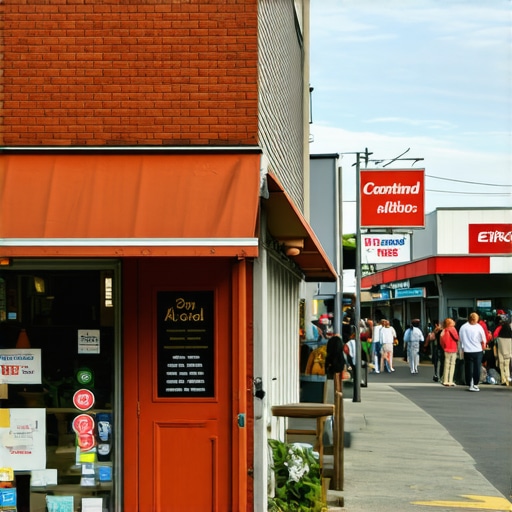
- Exterior shots that show your building in relation to the street signs or neighboring local businesses.
- Photos of your service vehicles parked in specific, identifiable neighborhoods.
Additionally, accuracy in your primary and secondary categories is non-negotiable. Choosing the Wrong Google Business Category is Ghosting Your Local Search Results. You must align your categories with the specific neighborhood-level intent you are targeting.
Advanced Tactics: Local Schema and Neighborhood Backlinks
As we move deeper into 2026, technical SEO requirements for local dominance have become more stringent. “Multi-Point Validation” is the gold standard. This means your business information must be verified across various high-authority, local-specific platforms. This goes beyond generic directories; it includes neighborhood associations, local blogs, and niche citations.
Local Business Schema is another critical component. By using advanced schema markup, you can explicitly tell search engines about your service area, your neighborhood, and even your proximity to specific geo-coordinates. This technical layer ensures that there is no ambiguity about your local relevance.
We often implement The Schema Markup Tweak That Actually Triggers Local Search Snippets to help our clients stand out. When your search result includes specific neighborhood details or local ratings, your click-through rate (CTR) increases, which in turn boosts your ranking. This is a vital part of any comprehensive gmb ranking service.
Remember, local SEO in 2026 is about proving you are the local authority. National chains can buy backlinks from national news sites, but they rarely have backlinks from the local neighborhood watch or the community garden blog. Those high-relevance, low-authority links are often more valuable for local rankings than a link from a national tabloid.
Conclusion: Reclaiming Your Local Market
The era of national chains dominating local search through sheer brute force is coming to an end. While they have the budget, you have the context. By leveraging neighborhood-specific content, optimizing your Google Business Profile for hyperlocal signals, and utilizing advanced technical SEO, you can outmaneuver the largest competitors in your industry.
Success in 2026 requires a shift from “City-wide” thinking to “Neighborhood-focused” execution. It’s about being the big fish in a series of small, highly profitable ponds. If you are ready to stop losing leads to national franchises, it is time to audit your current map presence and identify your neighborhood “Signal Gaps.”
Don’t let the giants crowd you out of your own backyard. Seek Expert Map Ranking Help for Dominating Local Searches and start reclaiming your local market today. The neighbors are looking for you – make sure Google knows exactly where to find you.