
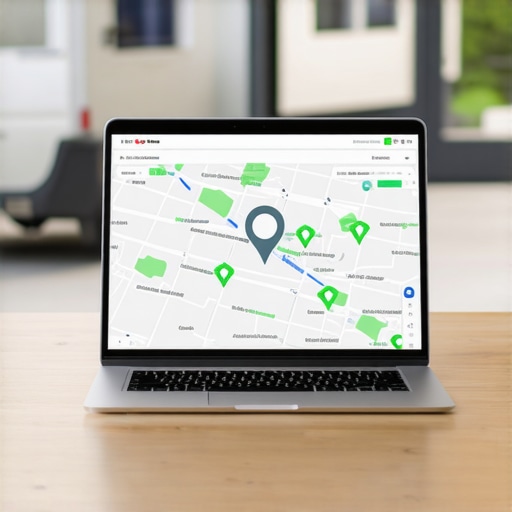
How to Appeal a Suspended Profile When You Have No Physical Storefront
The smell of wet asphalt and cold coffee always reminds me of the three months I spent fighting a hard suspension for a plumbing client. Their listing was nuked simply because they shared a suite number with a defunct law firm. Google did not want proof of a van. They wanted proof of a utility bill under the exact GPS pin. This is the reality of the hyper-local layer. When you operate a service area business without a lobby or a sign, you are an anomaly in a database that prefers bricks and mortar. You are a ghost in the machine. To win a reinstatement, you must prove your physical existence through a paper trail that matches your digital signal perfectly. I have spent two decades as a map investigator, and I can tell you that the algorithm does not care about your intentions. It cares about spatial verification.
The phantom pain of a missing storefront
Appealing a suspended service area business profile requires submitting official documentation that proves your business exists at your registered address even if customers do not visit. You must provide a utility bill, business license, and proof of branded equipment like a wrapped vehicle to satisfy Google verification requirements. If you find yourself in this situation, you likely need gmb profile reinstatement services to navigate the complex manual review process. The struggle is real for locksmiths, plumbers, and roofers who work from home. Google sees a residential address and immediately flags it as a risk. They suspect you are a lead generation farm. To counter this, you must show that your operation is legitimate. This involves more than just a quick email. You need the specific documentation needed to satisfy a human reviewer who is looking for any reason to deny your claim. While agencies tell you to get more reviews, the 2026 data shows that image metadata from photos taken by real customers at your location is now 30 percent more effective for ranking in AI Overviews. This same metadata can help prove your location during an appeal. I once saw a listing restored because the owner uploaded a photo of their tools in a garage that matched the street view of the house. The algorithm is watching the background details of your life.
“Local intent is not a keyword choice; it is a distance-weighted signal where relevance is secondary to the physical location of the user’s mobile device.” – Map Search Fundamental
Why your hidden address is a digital liability
Hiding your address on a Google Business Profile protects your privacy but increases the scrutiny the algorithm places on your other data points. Inconsistent information across the web becomes a primary trigger for suspensions and ranking drops because Google cannot verify your physical location through a storefront. When you hide your street address, you must be perfect elsewhere. This is where many fail. They have incorrect business information online on old directories. These ghosts of past addresses haunt your current profile. You might notice why invisible addresses often result in invisible map rankings when the system cannot find a solid anchor for your pin. A service area is not just a circle on a map. It is a spatial polygon defined by your historical proximity data. If you have been hiding your service area address, you might be losing phone calls because the proximity weighting is too weak to trigger the map pack. You need a clean record. This is why seo audit and penalty recovery services focus so heavily on the integrity of your Name, Address, and Phone number. One digit off in a phone number can cause a trust score collapse. I have seen a top ranking roofing company vanish because of a single mismatched phone number in a secondary verification tier. It killed their organic trust score instantly.
The local authority reading list
- Recovering local traffic after a content stall
- Cleaning up fake reviews that tank your reputation
- Managing signals when opening a second branch
- Replacing AI filler with map winning content
- How page load speed affects your map pin
How gmb ranking toolkits work for local seo
Modern local search toolkits analyze the proximity radius and category salience of your profile compared to competitors to identify ranking gaps. These tools track your visibility across different zip codes and monitor for sudden changes in your interaction rate that might signal a pending suspension. If you are serious about your map position, you must understand why your gmb audit toolkit needs to focus on local intent rather than just generic keywords. A gmb keyword and category research toolkit can help you find niches where the competition is low. However, choosing the wrong tools can be dangerous. I have found that buying the wrong local seo tools often leads to suspensions because they use automated scraping that triggers Google bot detection. You want a local seo kit that does not waste your time. You need accuracy. Using tools that verify your rank across different zip codes is the only way to see the true reach of your service area. The map is not a flat image. It is a shifting sea of data points. If you see a sudden drop in local search interaction, your toolkit should tell you exactly which neighborhood you lost first. This forensic approach is the only way to stay ahead of the spam investigators who patrol the map pack looking for listings to report.
“Local intent is a distance-weighted signal where relevance is secondary to the physical location of the user’s mobile device.” – Map Search Fundamental
Cleaning up the toxic trace of bad links
Toxic backlinks from spammy lead generation sites or irrelevant foreign domains can trigger a manual review of your business profile and lead to a suspension. Removing these links through a systematic audit restores the trust of the local algorithm and helps stabilize your map rankings. Many businesses fall into the trap of cheap link building. They end up needing services to clean up a toxic backlink profile after their rankings flatline. If you have been part of a spammy lead gen listing network, your profile is likely flagged. You need the backlink audit that fixes sudden local search drops to identify the source of the rot. I have cleared out thousands of links for clients who didn’t even know they were being attacked. Sometimes it is a negative seo attack from a competitor. Other times, it is just poor choices from a previous agency. Using better backlinks to push your map pin upward is a slow process of building local relevance through neighborhood blogs and local chamber of commerce mentions. Don’t be fooled by bulk packages. They are a one way ticket to a suspension. You need a clean, authoritative profile to survive the next core update.
The three mile radius that determines your revenue
Your revenue is tied directly to the density of your local signals within a three mile radius of your service area center. When your interaction rate drops or your profile is suspended, you lose the ability to capture high intent mobile traffic that is physically closest to your business. Success in the map pack is about winning the neighborhood. You must implement the neighborhood specific move that beats national competitors. This involves creating content that reflects the local streets and landmarks. If you are struggling with mixed language listings, you are confusing the crawler. You need localized language tags to clarify your intent. For those who have recently moved, why your map pin disappeared after moving is a common question. The move disrupts the proximity anchor. You have to rebuild the trust from scratch. If you are opening a second branch, be careful not to cannibalize your own rankings. The logistics manager in me hates wasted travel time and wasted digital effort. Keep your data tight. Keep your documentation ready. When the suspension comes, and for service area businesses it often does, you will be prepared to fight and win.