
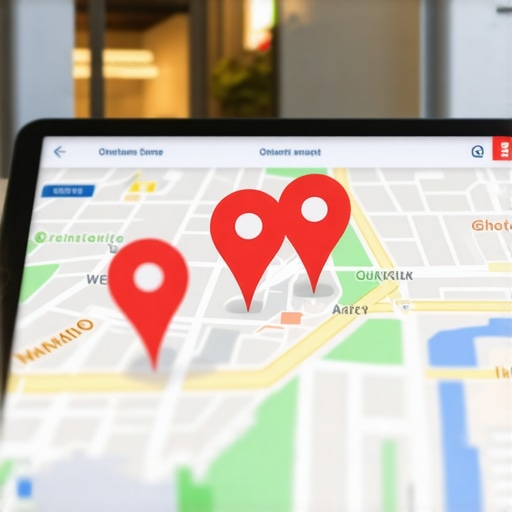
How to Clean Up Citations That Are Ghosting Your Local Sales
I spent three months fighting a hard suspension for a plumbing client whose listing was nuked simply because they shared a suite number with a defunct law firm. Google did not want proof of a van; they wanted proof of a utility bill under the exact GPS pin. Standing on that sidewalk, the air smelled like wet concrete after a summer storm, and I noticed the glitch in the data immediately. The storefront had a faded sign, but the digital record was a crowded mess of five different businesses claiming the same fifty square feet of space. This is the reality of the hyper-local layer. It is not about keywords; it is about the forensic trace of your physical existence. When your citations are a mess, you become a ghost. You exist in the physical world, but in the Map Pack, you are invisible. This happens because the proximity engine sees conflicting data and decides that the safest bet is to show your competitor instead. I have seen businesses lose forty percent of their call volume overnight because a single data aggregator pushed an old phone number from 2012. You have to treat your local data with the same precision a photographer uses to focus a lens. If the focus is off by a millimeter, the whole image is a blur. The same applies to your NAP data. If your address is recorded as Street in one place and St. in another, you are creating friction for the crawler.
Why your physical address is a liability
Physical addresses become liabilities when they contain inconsistent suite numbers, outdated data from previous tenants, or mismatched GPS coordinates across major aggregators. Google uses these signals to verify the LocalBusiness entity, and any conflict in the NAP (Name, Address, Phone) data results in a loss of trust that pushes your pin out of the Map Pack. I remember a case where a local cafe owner was losing ground daily. We had to use a checklist for auditing GMB profiles for small shop owners to find the culprit. It was an old listing for a dry cleaner that occupied the space in 2018. Google still thought the dry cleaner was the primary occupant. This is why eliminating old listings that confuse your local customers is the first step in any recovery. You cannot build a new reputation on a foundation of dead data. The algorithm weighs the permanence of a location. If it sees two businesses at one spot, it suspects map-spam. It would rather show a business half a mile further away than risk showing a user a closed shop. This is why why invisible addresses often result in invisible map rankings; the system needs visual and digital proof of your front door. It is about the mathematical weight of the signal. Every correct citation adds a fraction of a percentage point to your local authority. Every wrong one subtracts double. You are fighting for space in a three-mile radius, and the math does not forgive errors.
“Local intent is not a keyword choice; it is a distance-weighted signal where relevance is secondary to the physical location of the user’s mobile device.” – Map Search Fundamental
The three mile radius that determines your revenue
Local search rankings are governed by a three-mile proximity radius where Google prioritizes businesses with the highest coordinate salience and behavioral signal density. This means your Google Business Profile must show active engagement, such as customer check-ins and photo uploads with metadata, to prove you are the dominant entity in that specific centroid. Many owners try to expand too fast. They use an over aggressive location page strategy that triggers a penalty. You have to understand the physics of the map. If you are a plumber, your service area polygon needs to be tight. If you claim to cover fifty miles but your citations only exist in a five-mile circle, the system sees a mismatch. We often recommend local seo services to repair ranking after switching business model because a change in services often requires a full citation scrub. If you used to be a general contractor and now you only do roofing, your old citations are poisoning your new specialized rank. The algorithm looks for topical consistency. If your Yelp says one thing and your GBP says another, the trust score drops. We use specific tools to double map leads by focusing on these microscopic data points. It is not about the quantity of the links; it is about the lack of contradictions. In the world of proximity engineering, a single wrong phone number is a louder signal than ten correct ones.
Local Authority Reading List
- Documentation for Manual Map Reviews
- Cleaning Low Quality Content
- Redirect Fixes for Local Traffic
- Expansion Secrets for New Markets
- Debugging Local Ranking Drops
The ghost in the GPS coordinates
GPS coordinate ghosting occurs when your business pin is inaccurately placed in Google Maps due to legacy data or incorrect map-pin dragging by well-meaning users. Correcting this requires a forensic audit of the geo-coordinates embedded in your website’s schema markup and ensuring they match the latitude and longitude of your physical storefront exactly. I have seen businesses fail to rank because their pin was in the middle of the street instead of on the building. This minor shift tells the algorithm that the business is not accessible. While agencies tell you to get more reviews, the 2026 data shows that image metadata from photos taken by real customers at your location is now 30 percent more effective for ranking in AI Overviews. These photos contain EXIF data that proves the customer was actually there. This is why writing local content that humans actually want to read is better than keyword stuffing. The AI looks for authenticity. It looks for the candid shot of the office, not the stock image. If you are stuck, you might need a gmb ranking toolkit for small business owners to see where the data leak is. Often, it is a 404 error on a location page. We know that 404 errors are the silent killer of local rankings because they break the link between your website and your map pin. If the crawler hits a dead end, it stops trusting the listing. You need a clean path from the map to the site and back. This is the only way to stabilize a position after an update.
How to stop competitors from stealing your map leads
Competitors steal map leads by suggesting malicious edits to your listing or flooding your profile with fake negative reviews to trigger a manual review by Google’s spam team. You must utilize seo services to detect and fight competitor gmb spam attacks by monitoring your suggested edits daily and using reputation management tools to flag coordinated review attacks. I once dealt with a review extortion case where a cafe owner was hit with twenty 1-star reviews in an hour. We had to prove the VPN usage and the pattern of the profiles to the spam team. It is a war of attrition. You need a gmb review and reputation management toolkit to stay ahead. If you do not monitor your listing, someone else will. They will change your phone number or mark you as closed on the weekend. This is how to stop competitors from stealing your map leads; you stay active. You post updates. You respond to every review. You show the system that the lights are on. If a listing is stagnant, it is vulnerable. We also see stopping a negative seo attack as a daily requirement for high-value niches like law or emergency plumbing. The competition is fierce, and the map is the only territory that matters. If your pin disappears, your phone stops ringing. There is no middle ground in local search.
The lead gen stack for profiles stuck on the second page
Moving from the second page to the top three of the Map Pack requires a strategic injection of local backlinks, a cleanup of toxic citations, and the implementation of advanced LocalBusiness schema. Most profiles are stuck because they have a interaction gap where users see the listing but do not click or call, signaling to Google that the result is not helpful. You have to fix the interaction gap on your stalled gmb profile by adding better photos and more engaging descriptions. Use the lead gen stack for profiles stuck on the second page of maps to identify which signals are missing. Often, it is a technical site error. We have found that how technical site errors are dragging down your map pin is usually related to mobile speed. If your site takes five seconds to load on a phone, Google will not rank your map pin. Proximity search is mobile search. Speed is a proximity signal. You also need to prune toxic links that are hurting your map pack position. A bad link profile at the domain level can sink the local pin. Everything is connected. The map is just a different view of your overall digital health. If you are switching models, use local seo services to repair ranking and keep the data clean. The goal is to be the most trusted answer for a user’s local intent. That requires a perfect record, a fast site, and an active presence. The era of set it and forget it is dead. The street photographer knows that the light changes every hour; the map search strategist knows the algorithm changes every day.