
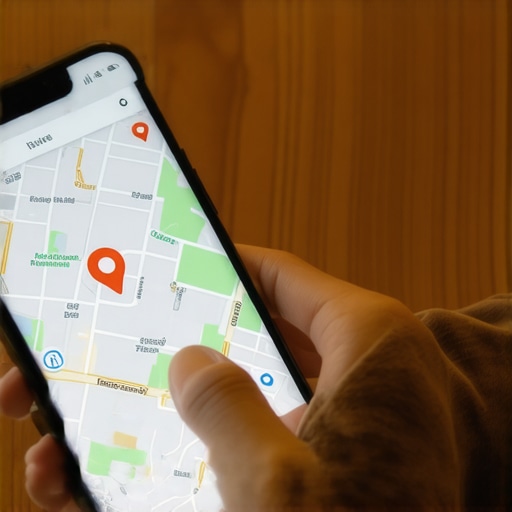
I smell like diesel exhaust and stale coffee from a thermos that has seen better days. After twenty years in the hyper-local layer, I see a business listing as a dispatch system, not a marketing page. If the trucks aren’t moving, the logic is broken. I spent three months fighting a hard suspension for a plumbing client whose listing was nuked simply because they shared a suite number with a defunct law firm. Google did not want proof of a van; they wanted proof of a utility bill under the exact GPS pin to verify the spatial node. When your phone stops ringing, it is usually because your proximity beacon has flickered out in a database that values physical proof over keyword density. The algorithm is a logistics manager that hates wasted travel time. If it cannot verify your dispatch point, it stops sending you the leads.
The ghost in the GPS coordinates
GPS coordinate salience and proximity signals dictate your visibility in the Google Map Pack. When a user searches for a local service, Google calculates the distance from the mobile device to your verified business location. If your NAP data or LocalBusiness Schema contains errors, your pin becomes a ghost in the system, resulting in a total loss of local search rankings. The system is looking for a mathematical weight associated with your longitude and latitude. I have seen businesses disappear because they moved five hundred feet and failed to update their secondary verification tier. You need the simple fix for a business pin stuck in search limbo to ensure the algorithm sees your coordinates as a primary service node. A single mismatched digit in your suite number acts like a broken bridge in a logistics route. The user can see you, but the engine refuses to route the traffic because the path is considered unreliable. This is why seo services to fix nap inconsistencies are not just administrative tasks; they are infrastructure repairs.
“Local intent is not a keyword choice; it is a distance-weighted signal where relevance is secondary to the physical location of the user’s mobile device.” – Map Search Fundamental
Why your physical address is a liability
Hiding your address or using a virtual office triggers immediate trust penalties in the local algorithm. Google demands evidence of physical presence, such as a storefront photo or a utility bill, to maintain a Google Business Profile. If you are a Service Area Business, failing to define your service area polygons correctly leads to your profile becoming invisible in the very neighborhoods you serve. I despise address rentals. They are a glitch in the storefront data that the system eventually purges. Many owners wonder why invisible addresses often result in invisible map rankings when they are trying to protect their home privacy. The reality is that the map engine is built for consumers who want to know where a service originates. If the origin is obscured, the trust score drops. We use local seo toolkit for multi location businesses to manage these signals across multiple dispatch points without triggering the spam filters. You cannot run a logistics network without clear hubs. When the engine detects a cluster of businesses using the same virtual suite, it nukes the entire coordinate to clean the map of noise.
The three mile radius that determines your revenue
Proximity radius shifts occur when a competitor establishes a stronger behavioral signal within a three-mile zone. This is measured through user interaction rates, check-in data, and the frequency of driving direction requests. If your competitors are getting more real customer photos with embedded EXIF metadata, they will dominate the proximity signal even if they have fewer reviews. The physics of local search is harsh. You might find why your proximity signal fails five miles from your office is due to a lack of local relevance in your content. The engine asks if people in that specific zip code actually interact with your brand. If the answer is no, the pin retreats. This is why seo services to recover positions after local algorithm shake up must focus on hyper-local behavioral triggers rather than just generic backlinks. You need to prove you are a local landmark. A business that is active in its immediate vicinity creates a gravitational pull that national chains cannot match through brute force spending.
Local Authority Reading List
- Fighting Complex Ranking Penalties
- Rebuilding After Review Removal
- Why Service Area Businesses Go Invisible
- Documentation for Reinstatement
- Recovering from a Ranking Crash
The verification loop of death
A hard suspension usually occurs when the secondary verification tier detects a mismatch between your business category and your physical reality. To win a reinstatement, you must provide government-issued documents, business licenses, and insurance certificates that match your Google Business Profile exactly. The support teams are investigators, not customer service agents. I have had to provide the specific documentation needed to win a complex business reinstatement including photos of the truck wrap parked next to the street address sign. They are looking for a forensic trace of your existence. If you are stuck in a loop, it is often because your primary category has changed or your service area is too broad. We often provide getting your suspended listing reinstated without losing your history as a specialized service because a single wrong move in the appeal process can lead to a permanent ban. It is about maintaining the flow of data without creating friction in the verification engine. Most agencies fail here because they treat it like a creative problem instead of a logistics and compliance problem.
“A business profile is a node in a spatial graph; its strength is calculated by the density of behavioral signals originating from the specific coordinates it claims to occupy.” – Proximity Intelligence Report
Technical site errors and the map pack link
Technical SEO issues like slow page load times and schema errors directly impact your map placement. Google uses your website as the authoritative source to confirm the data on your business profile, so a 404 error or a slow mobile experience can demote your pin. The engine will not route a user to a business if the digital storefront is boarded up. You must implement JSON-LD LocalBusiness Schema to provide the crawler with a clear map of your operations. We often find that fixing the schema errors that keep you out of the map pack is the fastest way to restore a lost position. If your site takes longer than three seconds to load, you are essentially telling the dispatch system that you are closed for business. This requires seo services to fix slow website and technical issues to ensure the connection between the map pin and the landing page is instant. The algorithm views a fast site as a sign of an efficient operation. In the logistics of search, speed is the ultimate currency. If your data is trapped behind broken code, the engine will find a more reliable partner to show the user.
The strategy for rebuilding your reputation after a mass review removal
Mass review removals occur when the AI filter identifies patterns of unnatural activity or VPN usage in your customer feedback. To recover, you must focus on first-party reviews that include specific service keywords and geographic markers from verified local users. The system is currently aggressive. If a competitor attacks you with fake one-star ratings, you need the strategy for rebuilding your reputation after a mass review removal to prove the validity of your genuine customers. We use gmb review and reputation management toolkit to monitor for these spikes in negative sentiment. Review sentiment is a distance-weighted signal; a review from someone fifty miles away carries less weight than a review from someone two blocks away. The goal is to build a wall of high-quality, local feedback that the algorithm cannot ignore. When the reviews vanish, it is a signal that your trust score has been compromised, and you must work to re-establish the behavioral loop that proves you are a legitimate merchant. This is not about quantity; it is about the forensic proof of a local transaction.