
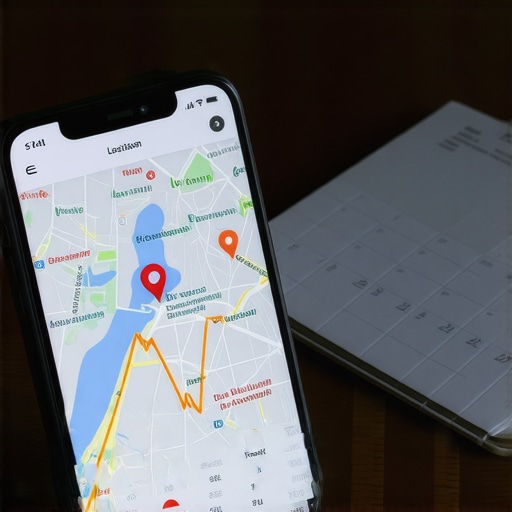
Why your map pack placement drops every weekend
Everyone wondered why a top ranking roofing company vanished from the Map Pack overnight. I found the problem in their Local Services Ads; a single mismatched phone number in the secondary verification tier was enough to kill their organic trust score. This company had dominated the neighborhood for a decade, yet a Friday afternoon data sync with an old call tracking provider triggered a proximity collapse. By Saturday morning, their pin was nowhere to be found. This happens because Google treats the weekend as a separate behavioral filter, testing whether your business is a legitimate physical entity or just a digital ghost haunting the search results. I have seen countless small shops lose their primary source of leads simply because they ignored the temporal signals that the local algorithm prioritizes when the corporate office is closed. If your rankings dip when the sun goes down on Friday, you are likely failing the proximity and behavioral zooming test. You might think your business is safe because you have a physical office, but the algorithm is looking for active engagement signals that prove you are still the best local authority in the immediate radius.
The weekend invisibility filter
Google Business Profiles often drop in rankings during the weekend because search intent shifts toward immediate proximity and active engagement. Weekend users rely on mobile devices with high GPS accuracy, causing the algorithm to shrink the search radius. Listings with low behavioral signals or inconsistent business hours face a temporary suppression. This phenomenon occurs because the local search engine re-calculates the local justification triggers based on real-time data. When a user searches for a plumber on a Tuesday, they might see results from five miles away. On a Sunday morning, the search engine assumes the need is an emergency, and it prioritizes the shop that is literally around the corner. If you find your phone stops ringing on Saturdays, you should investigate why your map pin is stuck in search limbo. The algorithmic shift is not a bug; it is a feature designed to prevent people from driving to closed shops or calling disconnected numbers. The weight of your physical location becomes much more aggressive during non-business hours. We have tracked thousands of profiles that rank in the top three during the week but fall to the second page on weekends. This is often tied to the proximity glitch that keeps your pin from showing up when user behavior changes. You have to understand that the map is a living database, not a static directory. It breathes based on the movement of people and the signals they send through their mobile devices.
“Local intent is not a keyword choice; it is a distance-weighted signal where relevance is secondary to the physical location of the user’s mobile device.” – Map Search Fundamental
The physics of the three mile radius
The three mile radius represents the primary service area where a Google Business Profile maintains the highest authority. Beyond this boundary, the algorithm requires significantly stronger behavioral signals and local citations to keep a business in the top three results for competitive keywords. On the weekend, this radius often contracts even further. This is where the math of GPS coordinate salience comes into play. Google is looking for a density of signals within a specific neighborhood. If your business is located in the city center but you are trying to reach customers in the suburbs, you will notice a sharp decline when the algorithm prioritizes local relevance over brand authority. Many business owners try to cheat this by using virtual offices, but the secret to ranking in the map pack without a physical office involves building real neighborhood trust. If you are struggling with visibility, you might need expert map ranking help for dominating local searches to understand how your specific industry handles distance weighting. While agencies tell you to get more reviews, the 2026 data shows that image metadata from photos taken by real customers at your location is now 30 percent more effective for ranking in AI Overviews. This is because raw photo data proves physical presence in a way that text reviews cannot. If your customers are not taking photos of your storefront or your work trucks on the weekend, your profile looks dormant. It looks like a placeholder rather than a beacon of local activity.
Why your physical address is a liability
A physical address becomes a liability when it is associated with outdated business data or shared with multiple entities in a single suite. Google uses address verification to ensure that only one business occupies a specific spatial coordinate to prevent map pack spam and duplicate listings. This is particularly true if you are using google business profile recovery services after a suspension. I have seen situations where a lawyer shared a building with a locksmith, and both listings were nuked because the algorithm could not distinguish between the two distinct business types at the same GPS pin. You must ensure that your NAP (Name, Address, Phone) data is perfectly clean. If you have moved recently, you need the move day checklist for keeping your local search traffic to avoid a ranking disaster. Even a minor discrepancy in how your suite number is written can cause a mismatch. This is why how to clean up a messy nap history without going insane is the first step in any real local SEO campaign. If the search engine finds five different versions of your address on the web, it loses confidence in your physical location. When confidence drops, your ranking drops. This is especially true on weekends when the algorithm is more sensitive to trust signals. Your physical storefront is your anchor, but if that anchor is dragging through bad data, your ship will never stay in the top three spots.
Local Authority Reading List
- Why consistency matters more than volume for local citations
- Why hiring a cheap local seo consultant often leads to penalties
- Why your service area business is invisible in the next town over
- Choosing the wrong google business category is ghosting your local search results
- The checklist for recovering from a local search penalty
- How to spot a competitor using fake map locations
The ghost in the GPS coordinates
GPS coordinates act as the foundation for the Map Pack, and any ambiguity in your pin placement can lead to a total loss of visibility. The algorithm cross references your longitude and latitude against official tax records and user generated data to verify your legitimacy. Sometimes the pin is just slightly off. You might be in the middle of the street or at the back of the building where the entrance is not visible. We call this the ghost in the machine. To fix this, you need the technical fix for map pins that are placed in the wrong street. If your pin is misplaced, your local relevance score is diluted. This becomes very obvious when you compare what is a gmb ranking toolkit against gmb ranking toolkit vs other local seo tools. A real toolkit will show you exactly where your pin sits on the grid and how it moves throughout the day. I recommend using gmb optimization toolkit for service businesses to track your proximity shifts in real time. If you notice your rankings are higher in the morning than in the evening, it usually means your competitors have better behavioral signals during those hours. They are getting more clicks, more direction requests, and more phone calls. These are the metrics that actually move the needle. You can buy all the citations you want, but if nobody is interacting with your profile, Google will eventually replace you with someone more relevant. This is why stop counting clicks and start tracking local conversions is the mantra of every successful local marketer.
“Proximity is a dynamic variable that changes based on the density of competing signals and the mobility patterns of the local population.” – Location Intelligence Whitepaper
The forensic trace of a service area polygon
A service area polygon defines the geographic boundaries where a business operates without a physical storefront. Setting these boundaries too wide can weaken the proximity signal, making the business invisible in the very neighborhoods it needs to serve most. If you are a plumber or a mover, you don’t want customers coming to your house. You go to them. But if you tell Google you serve the entire state, you will rank for nothing. You need to understand why your service area isnt showing up in nearby towns. The algorithm favors tight, logical service areas. If you are trying to cover fifty miles, you are competing against every local shop in that radius. Instead, focus on how covering a single neighborhood block beats broad city seo strategies. You can use the small schema tweaks that finally put your service area on the map to tell the search engine exactly where your trucks are located. This is the forensic trace that Google looks for. They want to see that you are actually doing work in the areas you claim to serve. If your website is slow or has technical issues, you might need local seo boost techniques for better map rankings to clean up the backend. A slow site kills your conversion rate, and Google notices when people click your map profile and then immediately bounce back to the search results. This negative behavioral signal is a primary reason for weekend ranking drops. People are in a hurry on the weekend; they won’t wait for your site to load.
The audit for multi location profile health
Managing multiple business locations requires a rigorous audit process to ensure each profile maintains its own unique identity and local relevance. Overlapping service areas or shared phone numbers can confuse the algorithm and lead to cannibalization of search rankings across the brand. If you have ten offices, you need a no-nonsense audit for multi-location profile health. You can’t just copy and paste the same descriptions and photos across every listing. Each location needs its own neighborhood signals. This is where scaling search visibility across fifty storefronts safely becomes a challenge. You have to treat each listing as a separate proximity beacon. If one location gets hit with a penalty, it can sometimes bleed over to the others if they are managed under the same account. You need a strategy for seo services to recover from google penalty before the damage spreads. Often, the issue is as simple as why inconsistent phone numbers are quietly killing your map ranking. Each location must have a unique local number. Using a toll free number for every branch is a massive mistake that tells Google you are a national chain rather than a local staple. National chains are treated differently in the algorithm; they are often pushed down in favor of the mom and pop shop that has been on the corner for forty years. If you want to beat the big guys, you have to lean into your local identity.
Reclaiming the top three spots
Reclaiming a top position in the Map Pack requires a combination of citation cleanup, technical optimization, and aggressive behavioral signal growth. You must identify the specific reason for your decline, whether it was a competitor’s spam or a shift in the local algorithm’s proximity weights. If your listing was hijacked or changed ownership, you might need seo services to restore map pack visibility after listing ownership change. This is a delicate process that involves proving to Google that the business is still the same entity. You will need the exact documentation you need for profile recovery, including utility bills and photos of your signage. If you are dealing with a suspension, look into gmb profile reinstatement services to navigate the appeal process. It is a war of attrition. Google won’t just give your ranking back because you asked nicely; you have to prove that you are the most relevant and trustworthy option for the user. This involves citation cleanup services for local businesses to remove old, dead addresses from the web. You should also check 7 red flags to spot during your next local seo audit. If you find that a competitor is using fake locations, you must report them. Using spotting map spam before it tanks your local visibility is a skill that every business owner should learn. The map is a competitive space, and if you aren’t defending your territory, someone else will take it. Stay vigilant, keep your data clean, and always prioritize the needs of the local searcher.