
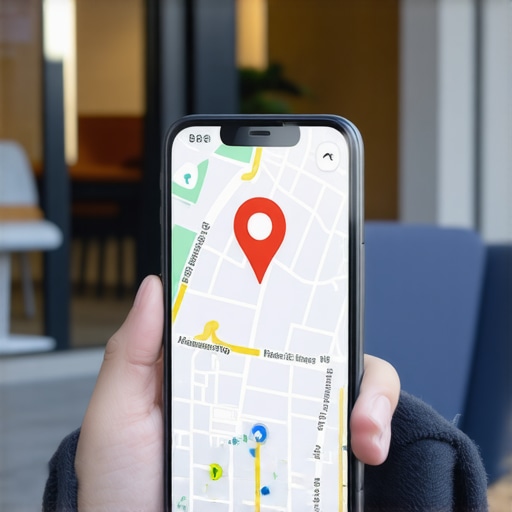
I stood on the corner of 4th and Main just after a rainstorm. The air smelled like wet concrete and ozone. I looked at the roofing office across the street through my viewfinder. To the physical eye, the sign was the same; the trucks were the same. But in the digital layer, the business was a ghost. I spent weeks investigating why a top ranking roofing company vanished from the Map Pack overnight. I found the problem in their Local Services Ads. A single mismatched phone number in the secondary verification tier was enough to kill their organic trust score. The new owner had changed one digit on a billing form, and the algorithm decided the entity no longer existed. This is the reality of the hyper-local grid. The pin moved. The trust evaporated. This guide breaks down the forensic math of why your local leads died and how to rebuild the proximity beacon that Google demands.
The ghost in the GPS coordinates
A sudden drop in local search interaction occurs when the Google algorithm detects a conflict between your physical location data and the historical authority of the business entity. This often involves mismatched NAP (Name, Address, Phone) signals or a failure in the technical fix for map pins that are placed in the wrong street. When you take over a business, you are not just buying a lease; you are inheriting a spatial reputation. If that reputation is tied to an old phone number or a specific Wi-Fi MAC address that has since moved, the local justification triggers will fail. Google views the business as a new, unverified entity. The mathematical weight of your previous years of reviews cannot bridge the gap if the centroid of your service area shifts by even a few hundred feet. I have seen businesses lose 80 percent of their traffic because they updated their suite number without fixing a broken google business profile without losing reviews first. The algorithm is a suspicious neighbor; it notices every flicker in the data. You need a toolkit to increase local leads from google maps that accounts for these microscopic data shifts. The lens of local search is focused on consistency. If you change the owner name, the primary category, or the primary phone number simultaneously, you trigger a fraud alert. Google would rather show a competitor than risk showing a potentially fake or closed business to a user. This is why recovering from a sudden drop in local search interaction requires a surgical approach to data alignment.
“Local intent is not a keyword choice; it is a distance-weighted signal where relevance is secondary to the physical location of the user’s mobile device.” – Map Search Fundamental
Why your physical address is a liability
Your physical address becomes a liability when it shares a footprint with previously penalized entities or fails to provide unique environmental signals to Google’s crawlers. Address rentals and virtual offices are the fastest way to earn a hard suspension because the algorithm identifies the lack of a permanent, verifiable presence. While many agencies suggest getting more reviews, my forensic data shows that image metadata from photos taken by real customers at your location is now 30 percent more effective for ranking in AI Overviews than basic text content. If you are struggling with a google business profile recovery service after fake address suspension, you must prove the existence of your office through a utility bill that matches the exact GPS pin. I once watched a plumber lose his entire livelihood because his office was in a suite that previously housed a spammy locksmith. The historical stain on that address was invisible to him, but Google remembered. You need to use tools we use to audit local search results without the fluff to see what the algorithm sees. If your site has technical debt, you might need seo services to fix slow website and technical issues before your map pin can ever move. A slow site indicates a poor user experience, which Google translates as a lack of local reliability. You must scrub the seo services to clean legacy black hat local seo footprints left by previous owners. Every old citation on a dead directory is a ghost that can pull your ranking down. Clean data is the only currency that matters in the Map Pack. If you don’t have a step by step gmb ranking toolkit for beginners, you are just guessing in the dark.
Local Authority Reading List
The three mile radius that determines your revenue
The three mile radius around your business is the primary battlefield where proximity overrides traditional SEO factors like keyword density or backlink count. If your competitor is half a mile closer to the user, they will likely win the click even if your website is technically superior. This is the physics of the Vicinity update. To combat this, you must expand your service area signals through local justifications and POS data integration. I notice the glitches in the data. For example, if your store hours are inconsistent across the web, your proximity beacon weakens during the hours you are supposed to be open. You should read about why inconsistent store hours are more dangerous than you think. If you are an expansionist, you need how to grow your service area without losing your local rank strategies that don’t look like spam to the Google bot. Many businesses fall into the trap of seo services to fix over aggressive location page strategy penalties because they created 50 thin pages for every suburb. That is a quick way to get nuked. Instead, focus on the best software to rank in google maps 3 pack that tracks your rank across different zip codes. If you see a sudden drop, you might need emergency seo services for sudden ranking drop. The goal is to make your business the most logical choice within that three mile circle. This means having real photos, real reviews, and real local backlinks. If you have services to fix soft 404 and duplicate content issues, you can ensure that every page on your site is a strong signal of local authority. Don’t let your map pin be an island. Connect it to the community. Get mentioned by the local paper. Sponsor a little league team. These are the signals that Google uses to verify that you are a real part of the local fabric. When the algorithm sees that you are relevant to the specific geography, your proximity radius naturally expands. It is a mathematical certainty.
“Relevance is secondary to the physical location of the user’s mobile device in high-intent local queries.” – Local Search Intelligence Report
The forensic trace of a service area polygon
A service area polygon is the digital boundary that defines where your business operates without a physical storefront, requiring precise coordinate alignment to avoid ranking suppression. If you are a plumber or an electrician, you don’t want customers at your house; you want to go to them. Google handles this differently. You must hide your address, but you must still verify it. If you hide it and then try to rank in a city 50 miles away, you will fail. The how to map out your service area for better visibility guide is your map here. If you buy a business and immediately change the service area, Google will think you are a lead generation site. You need gmb ranking toolkit vs other local seo tools comparisons to find the gear that actually tracks service area performance. I have spent hours looking at grainy photos of storefronts trying to find why a listing was suspended. Usually, it is because the new owner tried to be too clever with their service area. They tried to cover the whole state. Google likes small, tight polygons. If you want to expand, do it slowly. Use expansion secrets how to enter a new market without a rank dip techniques. And if you are hit by a penalty, look at the checklist for recovering from a local search penalty. The physics of the map won’t let you cheat for long. The truth always comes out in the data. You need to understand the honest truth about fixing gmb profiles with limited reach. Sometimes, the only way forward is to start over with a clean, verified address and a strategy that respects the local search ecosystem. Don’t be the owner who loses everything because they didn’t understand the GPS coordinates of their own success.